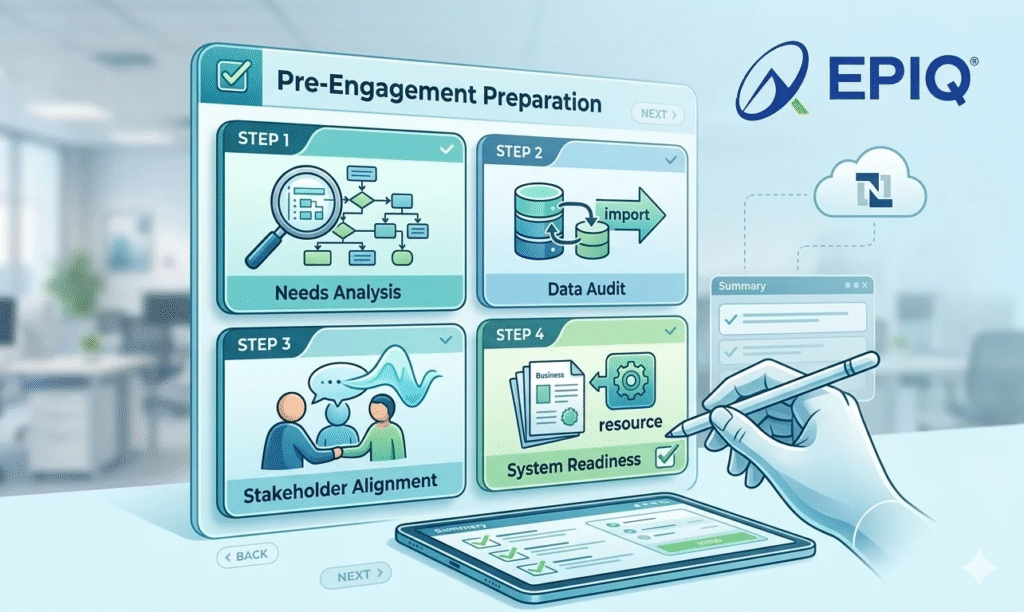

A strong partner helps you make smarter decisions, avoids messy rework, and sets you up for long-term scalability and success. A weak partner does the opposite. If you’re a US-based company investing in NetSuite or planning to re-implement it, here’s a simple guide that cuts through the noise and shows you what actually matters.
What a NetSuite Implementation Provider Really Does
Many teams assume implementation is just configuration. It’s not. A good provider becomes deeply involved in your processes before interacting with the system. They map workflows, identify bottlenecks, and determine how NetSuite can best support your business rather than forcing you to adapt to the software.
Their work usually includes requirement gathering, solution design, migration planning, automation setup, integrations, training, and support after go-live. When each piece is done well, your rollout moves faster, and your team sees value sooner.
US companies often deal with complex tax structures, multistate operations, and compliance layers that vary by region. A capable provider understands these nuances and designs NetSuite in a way that keeps you accurate and audit-ready.
Why Choosing the Right Partner Matters
Here is a thing many companies discover too late: NetSuite won’t deliver value on its own. You need a team that knows what to build and what to avoid. The right partner reduces project risk, improves data accuracy, and protects your timelines.
They also help your teams adopt the system faster by creating processes that feel natural rather than forced. That’s how you protect ROI and keep your ERP scalable as your US operations expand into new states, warehouses, and business units.
Key Factors to Evaluate When Selecting a NetSuite Implementation Provider
Industry Experience
Every industry has its own quirks. Manufacturers deal with work orders and assemblies. Wholesale distributors rely on effective inventory management. Software companies need subscription billing. If the provider has worked with companies across the US in your vertical, they bring templates, data structures, and best practices that cut development time and reduce errors. Look for case studies or references that match your business model and your geographic footprint.
Team Expertise and Certifications
Certifications show whether the team understands NetSuite at a technical and functional level. SuiteFoundation, ERP Consultant, Financial User, SuiteAnalytics, and Developer certifications matter. With these skills, you get cleaner setups, fewer hacks, and better long-term maintainability.
Implementation Methodology
A well-run implementation follows a predictable rhythm: discovery, design, build, testing, deployment, and hypercare. Ask how the NetSuite managed Services provider manages each stage. If they struggle to explain their method or rely too much on improvisation, consider it a red flag. A strong methodology keeps the project stable even during complex integrations or tight deadlines.
Customization vs Standardization
What this really means is knowing when to stick to NetSuite best practices and when to extend the system. Some partners push heavy customization because they don’t understand NetSuite deeply enough. Others avoid it even when your business genuinely needs it. The right provider knows how to balance both using SuiteFlow, SuiteScript, saved searches, and dashboards without creating a system that’s hard to maintain.
Data Migration Capabilities
Clean data is the backbone of every ERP. Look for strong experience in cleansing, mapping, migration testing, and financial reconciliation. This includes the chart of accounts, open transactions, inventory balances, and customer records. For US businesses operating across states or multiple entities, data consistency becomes even more important.
Integration Expertise
Most companies don’t run NetSuite in isolation. Whether it’s e-commerce, CRM, logistics, or custom tools, integrations can make or break the experience. Check whether the provider understands API-based integrations or iPaaS platforms. Many US companies rely on systems like Shopify US stores, Avalara for tax, or 3PLs with fixed APIs. A provider familiar with this ecosystem prevents sync issues and operational delays.
Project Management and Communication
You want a team that keeps you informed without overwhelming you. Clear timelines, weekly check-ins, structured documentation, and transparent risk reporting show the partner’s internal discipline. This usually determines whether your rollout is smooth or stressful.
Post-Go-Live Support and Optimization
NetSuite keeps evolving, and so does your business. The best providers stay with you after go-live, helping you automate more processes, refine dashboards, tighten controls, and onboard new teams. This ongoing support protects your investment and ensures you continue getting value as you scale.
Red Flags to Watch Out For
Watch for vague timelines, missing documentation, no clear migration strategy, pressure to accept unnecessary customizations, or the absence of a project manager. If they can’t explain how they handle testing or training, step back.
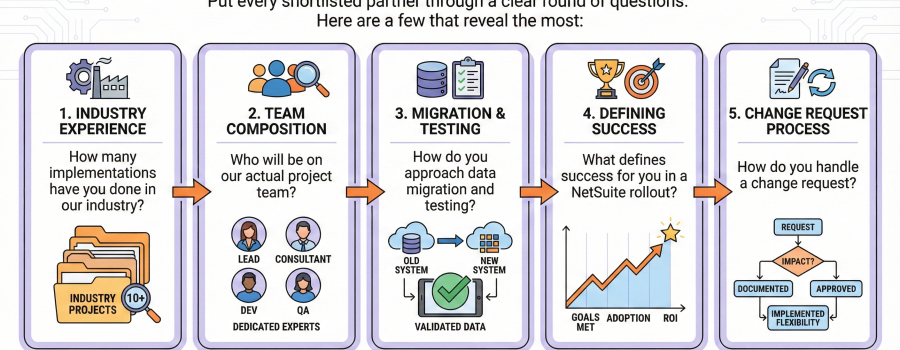
Questions to Ask Before You Finalize a Provider
- How many implementations have you done in our industry?
- Who will be on our actual project team?
- How do you approach data migration and testing?
- What defines success for you in a NetSuite rollout?
- How do you handle change requests?
- Their answers show how they think, not how they sell.
How to Compare Multiple Providers
When you’re evaluating three or more partners, score them using a simple matrix. Rate each one on industry experience, technical depth, methodology strength, communication style, support model, and pricing transparency. Clear differences appear once everything is laid out side by side.
What Drives Implementation Costs Up or Down
Pricing varies because businesses have different data volumes, workflows, integration needs, and training requirements. Custom scripts, complex financial structures, additional modules, and senior consultants increase cost. A transparent partner will help you prioritize what’s essential and what can wait. This clarity matters even more for US companies, where labor costs and multi-entity setups can quickly reshape budgets.
Why Many Companies Prefer Specialized NetSuite Partners
Specialized firms often deliver better results than general IT consultancies. They work faster because they’re not guessing their way through configurations. Their consultants live and breathe NetSuite, and their processes are built around ERP work. You get quicker responses and a long-term relationship instead of transactional support.
Final Checklist
- Proven experience in your industry
- Certified and experienced consultants
- Clear and repeatable methodology
- Strong migration and integration capability
- Transparent pricing
- Defined support roadmap
Conclusion
Choosing the best NetSuite implementation provider isn’t just a technical decision. It’s a long-term investment that shapes how your business runs. Take your time, evaluate each partner carefully, and choose the one that understands your goals and supports you well beyond go-live.
Frequently Asked Questions
Why does choosing the right NetSuite implementation partner matter for US companies?
Because NetSuite doesn’t generate value on its own. You need a partner who understands your industry, your workflows, and the complexity of US tax and compliance rules. The right team reduces project risk, improves data accuracy, and sets you up for long-term scalability.
What does a NetSuite implementation provider actually do?
They don’t just configure the system. They study your processes, map workflows, design solutions, handle data migration, build automations, set up integrations, train your team, and support you after go-live.
What should I look for when evaluating a NetSuite partner?
Look for industry experience, certified consultants, a clear implementation methodology, strong migration and integration skills, and transparent communication.
Why is industry experience so important?
Each industry has specific needs. A partner who has worked with companies similar to yours brings proven templates, best practices, and pre-built configurations that reduce errors and speed up the rollout.
How important are NetSuite certifications?
Certifications show that the team understands NetSuite at a technical and functional level. This leads to cleaner setups, better performance, and easier maintenance.
How do I know if a provider is pushing unnecessary customizations?
If they avoid NetSuite best practices or overuse scripting without clear justification, that’s a red flag. The right partner knows when to customize and when to keep things standard.
How can I identify red flags in a potential partner?
Vague timelines, missing documentation, unclear migration plans, over-customization, inconsistent communication, or the absence of a project manager are warning signs.
What questions should I ask before choosing a provider?
Ask about their industry experience, team composition, migration strategy, testing process, success criteria, and how they handle change requests.
How should I compare multiple NetSuite partners?
Use a scoring matrix. Rate each partner on experience, technical depth, methodology, communication, support model, and pricing transparency.
What should be on my final checklist before choosing a provider?
Industry experience, certified consultants, strong methodology, proven migration and integration skills, transparent pricing, and a defined post-go-live support plan.