
You invested six figures into NetSuite. The implementation partner promised a smooth go-live. But here you are—months past the original deadline, budgets blown, and your teams are still toggling between spreadsheets and a half-configured ERP that nobody trusts.
If this sounds familiar, you are not alone. Industry data consistently shows that between 50% and 75% of ERP implementations fail to meet their original objectives due to cost overruns, timeline delays, or misalignment with actual business needs. For NetSuite specifically, the compressed implementation timelines—often targeting go-live within four to six months—leave very little room for error. One misstep in data migration or requirements gathering, and the entire project can spiral.
The good news? A failed NetSuite implementation does not have to remain a failure. NetSuite project rescue is a structured recovery process that identifies what went wrong, stabilizes your environment, and rebuilds the implementation around your real business requirements—without starting from scratch.
In this guide, EPIQ Infotech—a certified Oracle NetSuite Alliance Partner with over 15 years of ERP consulting experience walks you through everything you need to know about NetSuite project rescue: the warning signs, root causes, recovery methodology, and how to choose the right partner to get your ERP back on track.
What Is NetSuite Project Rescue?
NetSuite project rescue—sometimes called NetSuite recovery or NetSuite remediation—is the process of diagnosing, stabilizing, and correcting a NetSuite implementation that has stalled, failed to deliver expected outcomes, or gone live with critical deficiencies. It differs from a fresh implementation in one crucial way: rescue work must contend with existing configurations, migrated data, customizations, user habits, and organizational fatigue that a greenfield project simply does not face.
A rescue engagement typically begins with a comprehensive technical and functional audit, followed by a prioritized remediation roadmap. The objective is not to tear everything down but to preserve what works, fix what is broken, and fill the gaps that were missed the first time around.
Warning Signs Your NetSuite Implementation Needs Rescue
NetSuite implementation failures rarely happen overnight. They accumulate through a series of overlooked red flags. Here are the most common warning signs that indicate your project may need professional intervention:
1. Persistent Manual Workarounds
If your finance team is still exporting data to Excel for reconciliation, or your warehouse staff is tracking inventory outside the system, the implementation did not deliver on its core promise. Manual workarounds are the most visible symptom of an ERP that was configured for the demo, not for your daily operations.
2. Inaccurate or Unreliable Reporting
When stakeholders do not trust the numbers coming out of NetSuite, they stop using it. This usually points to dirty data migration, misconfigured accounts, or improperly mapped transaction flows. Poor data quality is consistently cited as a leading cause of ERP failure across the industry.
3. Budget and Timeline Overruns Beyond 25%
Some variance is normal in complex ERP projects. But when your project has exceeded its original budget by more than 25% or blown past the go-live date by multiple months with no clear path forward, you are no longer dealing with delays—you are dealing with a structural failure in project governance.
4. Low User Adoption
Flat adoption metrics a few months after go-live are a serious warning sign. When users revert to legacy systems or create shadow workflows, it typically indicates that the system was not configured to match how they work, or that change management and training were insufficiently prioritized during implementation.
5. Broken Integrations and Customizations
NetSuite’s automatic bi-annual updates are a major advantage of the platform—but poorly built customizations can break every time Oracle pushes an update. If your team spends significant time firefighting integration errors or patching SuiteScript after each release, the original implementation created technical debt that needs to be resolved.
6. Loss of Executive Sponsorship
When leadership disengages from the project, resources dry up and decision-making stalls. Research shows that 77% of successful ERP projects cite consistent leadership backing as a critical factor from start to finish. Without it, even well-designed rescue plans struggle to gain traction.
Root Causes of Failed NetSuite Implementations
Understanding why an implementation failed is essential before any rescue work begins. Through our experience at EPIQ Infotech, and consistent with industry analysis, the most common root causes fall into the following categories:
The Sales-to-Service Handoff Gap
The team that sells NetSuite is rarely the team that implements it. Verbal promises made during the sales cycle—about features, timelines, or capabilities—often do not translate into the Statement of Work. When the delivery team arrives and scopes the project differently from what was demonstrated, friction, change orders, and budget overruns follow immediately.
Inadequate Requirements Gathering
Rushing through the discovery phase to hit an aggressive timeline is one of the fastest ways to derail a project. If business requirements are not documented thoroughly, including edge cases, regulatory constraints, and multi-entity complexities, the resulting configuration will not support your actual operations.
Poor Data Migration Strategy
Migrating dirty data—duplicates, incorrect addresses, mismatched item codes—from legacy systems into NetSuite guarantees bad reports and broken workflows. The principle of “garbage in, garbage out” applies strictly here. Without a deliberate data cleansing and validation strategy, the new system inherits all the problems of the old one.
Over-Customization
Organizations often try to replicate their legacy workflows inside NetSuite through heavy customization, rather than adapting processes to leverage the platform’s native capabilities. Excessive customization inflates costs, complicates upgrades, and creates a fragile system that is difficult to support long-term. Controlled customization—prioritizing configuration over codes a hallmark of successful implementations.
Part-Time Project Leadership
Assigning the NetSuite project lead role to a Controller or IT Director who already has a full-time job is one of the most predictable failure modes. A NetSuite implementation requires daily attention to decisions, testing, and vendor coordination. When the internal lead is distracted by month-end close or other operational responsibilities, the project stalls.
Insufficient Testing and Training
Skipping comprehensive User Acceptance Testing (UAT) or rushing end-user training creates a ticking time bomb. A system that passes a demo walkthrough is not the same as one that handles real transaction volumes, exception scenarios, and multi-department workflows under production conditions.
Choosing the Wrong Implementation Partner
This is perhaps the most consequential decision in the entire process. Whether it is chasing the lowest bid, skipping due diligence, or confusing product knowledge with delivery expertise, selecting the wrong partner is where many ERP implementations fail before they even start. Projects run with experienced implementation consultants achieve significantly higher success rates—up to 85% compared to those attempted without expert guidance.
EPIQ Infotech’s NetSuite Project Rescue Methodology
At EPIQ Infotech, we approach every NetSuite project rescue engagement with a structured, phased methodology designed to minimize disruption while delivering measurable progress at each stage. Here is how we work:
Phase 1: Discovery and Diagnostic Audit
Before we fix anything, we listen. Our certified NetSuite consultants conduct a thorough assessment that includes:
- Stakeholder interviews across finance, operations, IT, and executive leadership to understand pain points and unmet expectations
- Technical audit of system configuration, customizations (SuiteScript, workflows, saved searches), integrations, and role/permission structures
- Data quality analysis to identify migration errors, duplicates, orphaned records, and reporting discrepancies
- Gap analysis comparing the current system state against your original business requirements and industry best practices
- Review of project documentation, including the original Statement of Work, Business Requirements Document, and change order history
Deliverable: A comprehensive Rescue Assessment Report with findings, risk ratings, and a prioritized remediation roadmap.
Phase 2: Stabilization
Once the audit is complete, we move to stabilize your environment by addressing the most critical issues first:
- Fixing broken integrations and data flows that are causing daily operational disruption
- Correcting the misconfigured chart of accounts, tax settings, revenue recognition rules, or inventory management parameters
- Resolving data integrity issues through targeted cleansing, deduplication, and reconciliation
- Removing or refactoring unstable customizations that break during NetSuite’s bi-annual updates
- Implementing proper role-based access controls and security protocols
The goal of this phase is to stop bleeding and get your teams to a point where they can trust the system for daily operations while the deeper remediation work continues.
Phase 3: Remediation and Optimization
With the system stabilized, we move into the deeper work of aligning NetSuite with your actual business processes:
- Reconfiguring modules (financials, inventory, order management, CRM) to match validated business requirements
- Rebuilding integrations with third-party systems using best-practice middleware and API approaches
- Replacing heavy customizations with native NetSuite functionality wherever possible to reduce technical debt
- Configuring dashboards, KPIs, and saved searches that give leadership the real-time visibility they need
- Setting up proper sandbox environments for future testing and development
Phase 4: User Training and Change Management
Technical fixes only work if people use the system. EPIQ delivers role-based training tailored to how each department interacts with NetSuite—not generic platform walkthroughs. We conduct hands-on workshops, create process documentation, and work with your internal champions to build sustainable adoption. Change management is not an afterthought in our methodology; it is woven into every phase.
Phase 5: Go-Live Readiness and Hypercare
For projects that had not yet gone live or that went live prematurely, we conduct a formal go-live readiness assessment. This includes end-to-end transaction testing, data validation, integration stress testing, and cutover planning. Post-go-live, EPIQ provides a hypercare period with dedicated support to address issues in real time as your teams ramp up on the stabilized system.
Phase 6: Ongoing Managed Services
A successful rescue is not a one-time event—it is the beginning of a long-term partnership. EPIQ offers managed services that include proactive system monitoring, release management, functional and technical support, and strategic advisory to ensure your NetSuite environment continues to evolve with your business.
The True Cost of Ignoring a Failed Implementation
Some organizations hesitate to invest in a rescue engagement, hoping the problems will resolve themselves or that their internal team can gradually fix things. This is rarely the right approach, and the hidden costs of inaction are substantial:
- Financial drain from ongoing manual workarounds, duplicate data entry, and inefficient processes that erode the ROI you were promised
- Audit risk when data integrity issues cause auditors to question financial controls and reporting accuracy
- Talent attrition as skilled IT staff and project managers burn out or leave due to frustration with a broken system
- Opportunity cost as leadership loses confidence in future technology investments, stalling digital transformation initiatives
- Competitive disadvantage as competitors who have successfully implemented gaining real-time visibility, faster close cycles, and operational agility that you lack
The longer you wait, the more expensive the rescue becomes—and the harder it is to rebuild organizational trust in the platform. Acting decisively is almost always the more cost-effective path.
How to Choose the Right NetSuite Project Rescue Partner
Not every NetSuite partner is equipped to handle rescue work. Implementing a new system and recovering a distressed one are fundamentally different skill sets. When evaluating rescue partners, look for the following:
- Proven rescue experience with documented case studies of recovering failed or stalled implementations, not just new deployments
- Certified NetSuite expertise, including functional consultants, technical architects, and SuiteCloud developers who hold current Oracle certifications
- A structured methodology with clearly defined phases, deliverables, and success metrics—not a vague promise to “make it work.”
- Industry-specific knowledge in your vertical, whether that is manufacturing, distribution, retail, professional services, or healthcare
- Transparent communication with regular progress reporting, honest assessments of risk, and no hidden fees or scope surprises
- Post-rescue support through managed services that ensure continuity after the initial remediation is complete
Why EPIQ Infotech for NetSuite Project Rescue?
EPIQ Infotech has been delivering enterprise technology solutions since 2013. As a certified Oracle NetSuite Alliance Partner based in the United States, we bring a unique combination of deep platform expertise, industry knowledge, and a client-first philosophy to every engagement.
Here is what sets EPIQ apart:
- 15+ years of ERP consulting experience across Oracle NetSuite, JD Edwards.
- 100+ successful NetSuite projects spanning implementation, optimization, customization, integration, and rescue
- A team of certified NetSuite professionals, including functional consultants, SuiteCloud developers, and solution architects
- Industry expertise across manufacturing, wholesale distribution, retail, professional services, healthcare, and more
- 96% client retention rate—a testament to the long-term relationships we build and the results we deliver
- Teams in US and India are providing responsive, time zone-friendly support with 24/7 availability
- Trusted by global brands
We do not just fix broken implementations—we transform them into the strategic business platform your NetSuite investment was always meant to be.
Frequently Asked Questions
How long does a NetSuite rescue project typically take?
It depends on the severity and scope of the issues. A diagnostic audit typically takes two to four weeks. Stabilization and remediation can range from six weeks for targeted fixes to three to six months for a comprehensive overhaul. EPIQ provides a realistic timeline after the initial assessment.
Do we have to start the implementation over from scratch?
In most cases, no. The purpose of a rescue engagement is to preserve what works and fix what does not. A complete re-implementation is typically only recommended when the existing configuration is so fundamentally flawed that remediation would cost more than starting fresh.
What if we are still under contract with our current implementation partner?
EPIQ can work alongside your existing partner or take over the engagement entirely, depending on the situation. We begin with an independent assessment, so you have an objective view of where things stand before making any decisions about partner transitions.
How much does NetSuite project rescue cost?
Costs vary based on the complexity of the issues, the number of modules involved, and the extent of customization and integration work required. EPIQ offers a fixed-fee diagnostic assessment so you can understand the scope and investment needed before committing to a full rescue engagement.
Can EPIQ help if we haven’t gone live yet, but the project is stalled?
Absolutely. Pre-go-live rescue is often more cost-effective than post-go-live remediation because you can correct courses before bad data and broken processes become embedded in daily operations. If your project has stalled, it is better to pause, audit, and bring in a specialized rescue partner than to push a broken system live.
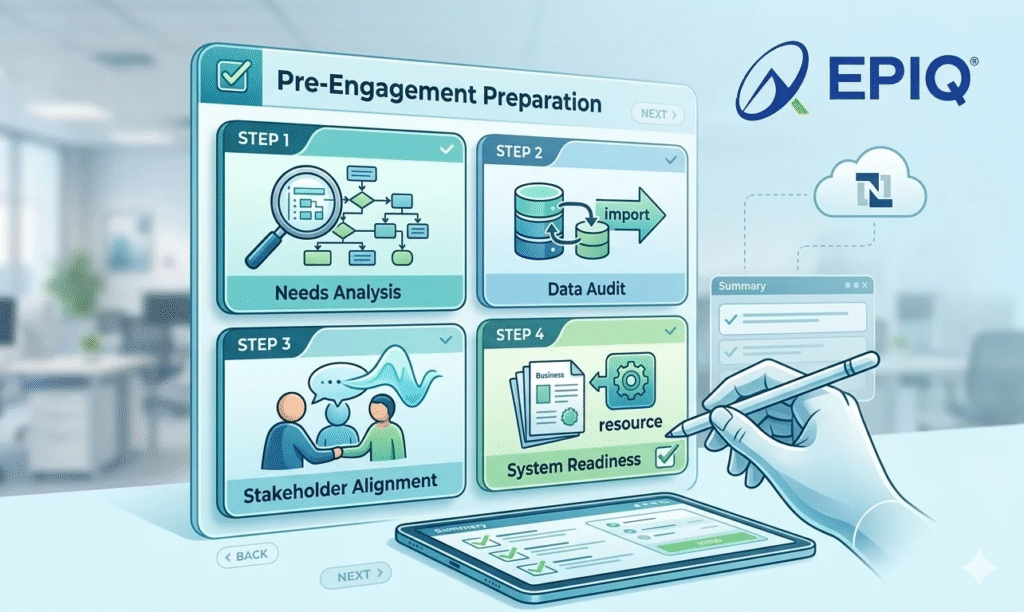
What is stakeholder alignment in an ERP implementation?
Stakeholder alignment means ensuring executives, project teams, and department users all understand the goals of the implementation. Clear roles, responsibilities, and expectations prevent conflicting requirements and help the project move forward efficiently.
How long does a NetSuite implementation typically take?
Implementation timelines vary widely depending on the scope of the project. Smaller implementations may take three to four months, while complex multi-department or multi-entity deployments can take six months or longer.