By EPIQ Infotech | Oracle Fusion Cloud Implementation Specialists | 15+ Years ERP Optimization Experience
Published: February 12, 2026 | Reading Time: 8 minutes
Why Oracle Fusion Optimization Matters After Go-Live
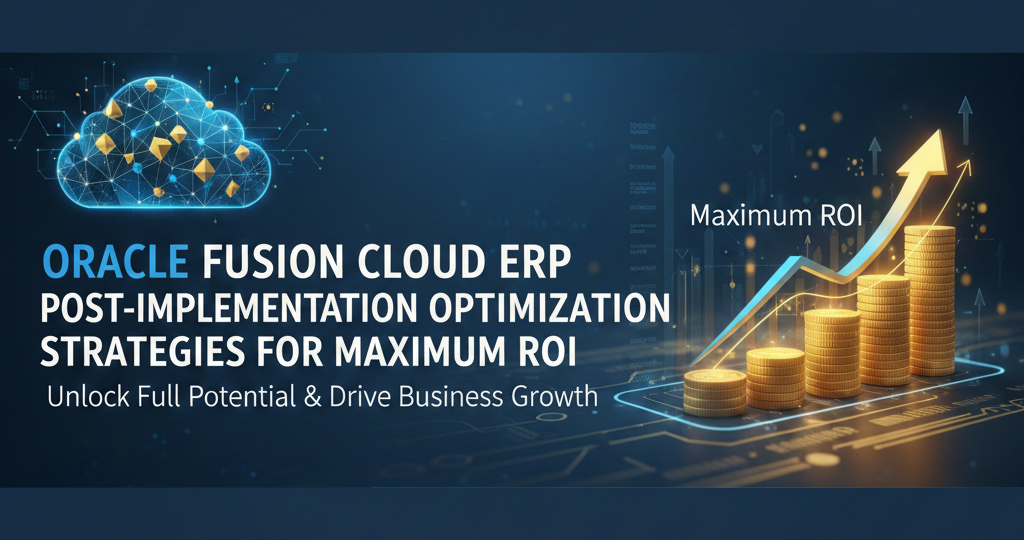
Oracle Fusion Cloud ERP go-live marks the beginning, not the end, of your digital transformation journey. Organizations that treat implementation as a one-time project typically utilize only 30-40% of Fusion’s capabilities within the first year, leaving significant ROI unrealized.
Oracle releases quarterly updates that introduce features across finance, supply chain, procurement, and HR modules. Without structured optimization, businesses miss opportunities to reduce cycle times, strengthen controls, and automate manual processes.
The optimization gap: Systems remain stable but stagnant. Processes stay half-manual. Quarterly updates go unused. Reporting gaps persist.
This guide outlines eight proven strategies for continuous Oracle Fusion optimization, backed by measurable KPIs and real implementation experience.
1. Transform Quarterly Updates Into Strategic Business Reviews
The Problem with Technical-Only Update Approaches
Most organizations treat Oracle’s quarterly releases as IT maintenance events. This misses the strategic value embedded in new capabilities.
Strategic Update Review Framework
- Assign functional owners to review release notes by module
- Map features to business priorities using a prioritization matrix
- Test in sandbox environments before production deployment
- Create adoption roadmaps with user training plans
Example: Oracle’s Q3 2025 update introduced enhanced predictive cash forecasting. Finance teams that evaluated this capability replaced manual Excel-based forecasts, reducing preparation time by 65% while improving accuracy.
Action item: Schedule quarterly release review meetings 2-3 weeks after update announcements. Include finance, operations, and IT stakeholders.
2. Optimize Business Processes, Not Just System Configuration
Breaking Free from Legacy Workflow Replication
A common implementation mistake is replicating legacy processes inside Fusion without questioning their efficiency. This limits performance gains and increases complexity.
Process Review Questions
- Do approval hierarchies reflect the current organizational structure?
- Can multi-step manual validations be automated through business rules?
- Are workflows compliant with current regulatory standards?
- Do reporting structures match how the business operates today?
Simplifying processes and aligning with standard functionality reduces customization debt and long-term maintenance costs.
Case metric: A manufacturing client reduced procurement approval steps from 7 to 3, cutting approval time from 5.2 days to 1.8 days.
3. Implement Robust Data Governance and Master Data Controls
Why Data Quality Determines ERP Success
Inconsistent supplier records, duplicate customer entries, and outdated chart structures directly impact reporting accuracy and compliance risk.
Data Governance Framework Components
- Data ownership roles for customers, suppliers, products, and financial dimensions
- Monthly master data quality audits
- Automated validation rules
- Controlled approval workflows for master data changes
Strong governance reduces reconciliation time, accelerates financial close cycles, and improves executive dashboard reliability.
4. Expand Automation Using Fusion’s Intelligent Capabilities
High-Impact Automation Opportunities
- Automated three-way invoice matching
- Exception-based approvals
- Predictive expense detection
- Automated revenue recognition
- Vendor recommendations based on performance history
Each automation initiative should tie to a defined KPI. If it does not reduce time, cost, or risk measurably, defer it.
5. Monitor Business Outcome KPIs, Not Just System Uptime
Moving Beyond Technical Metrics
System availability matters, but business value delivery matters more.
Critical ERP Performance Metrics
| KPI | Target Benchmark | Optimization Impact |
|---|---|---|
| Financial close duration | 5-7 business days | Enables faster decision-making |
| Procure-to-pay cycle time | 15-20 days | Improves supplier relationships |
| Days’ sales outstanding (DSO) | 30-45 days | Accelerates cash conversion |
| Approval turnaround time | <48 hours | Reduces operational delays |
| Audit issue frequency | <5 per quarter | Strengthens compliance posture |
Establish quarterly ERP performance reviews with executive stakeholders and track improvements tied to specific initiatives.
6. Drive User Adoption Through Structured Enablement
The Adoption Challenge
Technology delivers zero value if users do not understand it.
Sustainable Enablement Framework
- Role-based annual refresher training
- Internal super users in each department
- Quarterly capability sessions aligned with new releases
- Structured feedback mechanisms
Fusion Center of Excellence Model
A lightweight CoE manages governance, updates, documentation, and escalation processes.
7. Conduct Periodic ERP Health Checks
Health Check Assessment Areas
- Configuration quality and customization review
- Security role conflicts
- Workflow bottlenecks
- Integration stability
- Reporting accuracy validation
Schedule annually, before audits, or before expansion initiatives.
8. Align ERP Configuration with Business Growth Strategy
Growth-Readiness Questions
- Does the configuration support multi-entity consolidation?
- Are tax structures ready for new geographies?
- Can the reporting scale across subsidiaries?
- Is licensing aligned with projected growth?
Common Optimization Failures to Avoid
Why Initiatives Fail
- Unclear ownership
- Ignored quarterly updates
- Informal data governance
- Undefined KPIs
- One-time project mindset
The EPIQ Infotech Optimization Methodology
Service Components
- Quarterly release assessments
- Process refinement workshops
- Data governance advisory
- Automation roadmap planning
- ERP health diagnostics
- Executive KPI dashboards
Optimization removes friction and focuses on measurable outcomes aligned with business objectives.
From Stable to Strategic: Your Next Steps
Organizations that commit to structured quarterly reviews and measurable KPI tracking achieve significantly higher ROI compared to those operating in maintenance mode.
Immediate Actions
- Schedule a quarterly update review
- Define 3-5 business outcome KPIs
- Identify one high-volume process for automation
- Conduct a data quality audit on the top master data entities
About the Author: EPIQ Infotech specializes in Oracle Fusion Cloud ERP post go-live support and optimization with 15+ years of enterprise software consulting experience. The team holds Oracle certifications across Finance, Supply Chain, HCM, and Technical Architecture.
Frequently Asked Questions
Why is Oracle Fusion optimization necessary after go-live?
Go-live confirms the system works. It does not guarantee you are using it well. Most organizations use only a fraction of Fusion’s capabilities in the first year. Without structured optimization, quarterly updates go unused, automation remains limited, and reporting gaps persist. Optimization ensures the system continues delivering measurable business value.
How often should Oracle Fusion be reviewed for improvements?
At minimum, quarterly. Oracle releases updates every quarter, and each release can introduce features that reduce manual work or improve controls. A structured review cycle tied to business KPIs ensures updates are evaluated strategically rather than treated as technical maintenance.
What is the biggest mistake companies make after implementation?
Replicating legacy processes without redesigning them. Many teams rebuild inefficient workflows inside Fusion instead of simplifying them. This increases complexity and limits ROI. Optimization should focus on improving business processes, not just configuring the system.
How do quarterly Oracle updates impact business performance?
When evaluated strategically, updates can improve forecasting accuracy, automate approvals, strengthen compliance controls, and reduce cycle times. When ignored, they represent missed efficiency gains and competitive disadvantage.
What role does data governance play in ERP success?
Data quality directly affects reporting accuracy, audit readiness, and financial close timelines. Without clear data ownership, validation rules, and audit controls, errors multiply. Strong governance reduces reconciliation effort and strengthens compliance posture.
Which automation opportunities deliver the fastest ROI in Fusion?
High-volume, repetitive processes typically deliver the strongest returns. Examples include automated invoice matching, exception-based approvals, revenue recognition automation, and AI-driven expense monitoring. The key is linking automation to measurable KPIs such as reduced processing time or lower error rates.
What KPIs should executives monitor post go-live?
Focus on outcome-based metrics, not just system uptime. Core indicators include financial close duration, procure-to-pay cycle time, days sales outstanding, approval turnaround time, and audit issue frequency. These reflect real business impact.
What causes ERP optimization initiatives to fail?
Common causes include unclear ownership, lack of KPI tracking, informal data governance, and treating optimization as a one-time project. Successful programs operate with executive sponsorship and ongoing governance.