
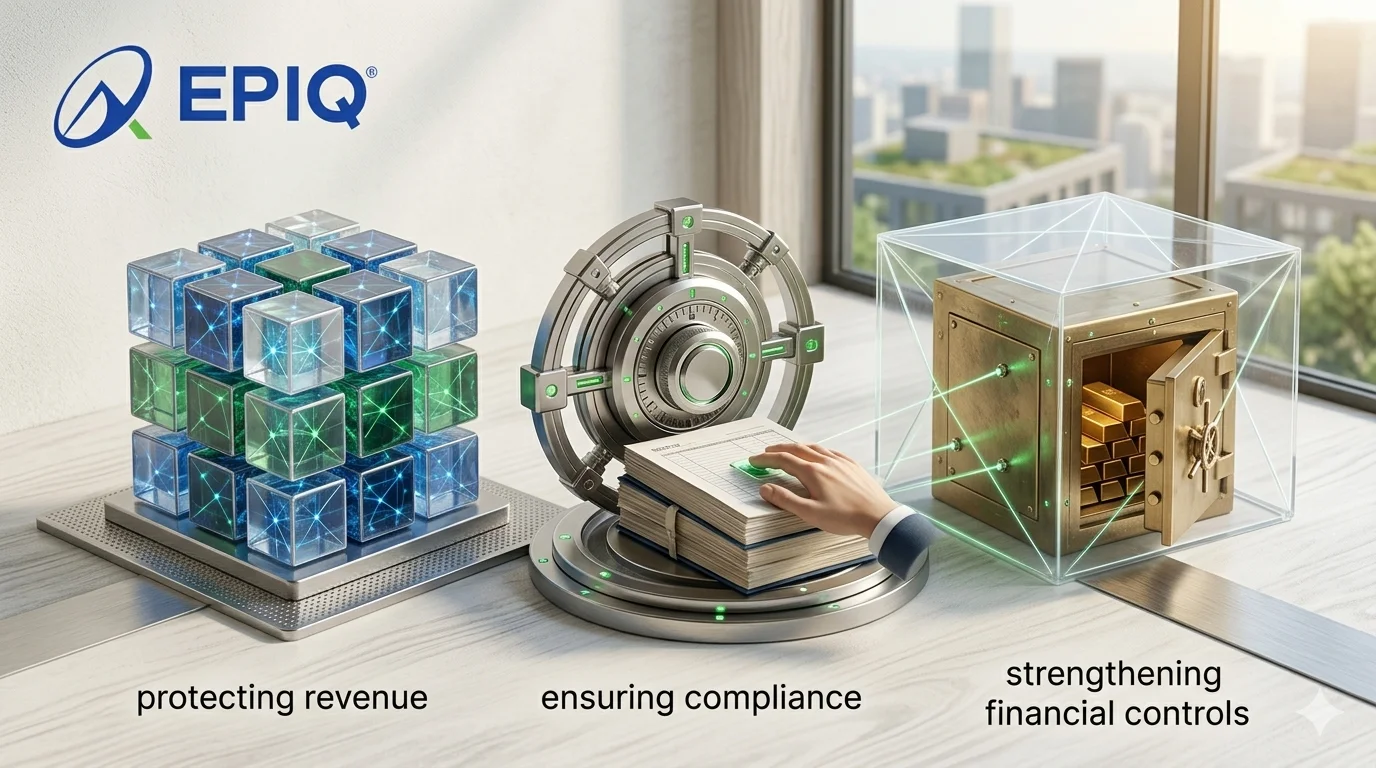
How proactive ERP support protects revenue, ensures compliance, and strengthens financial controls
Published by EPIQ Infotech | April 2026
If your CFO still treats ERP maintenance as an IT line item rather than strategic risk control, your organization is carrying more exposure than it should. In 2026, where regulatory complexity is accelerating, cyberattacks are targeting mid-market companies at record rates, and system downtime can cost upwards of $100,000 per hour, NetSuite support isn’t optional—it’s a core pillar of enterprise risk management.
This article explains why proactive, expert-led NetSuite support belongs on the CFO’s risk register—not buried in the IT budget—and how it protects revenue, ensures compliance, and strengthens financial controls across every department that touches your ERP.
The CFO’s Risk Landscape Has Changed
The role of Chief Financial Officer has expanded well beyond balance sheets and quarterly reporting. According to Oracle NetSuite’s own research, 2026 is shaping up to be one of the most challenging years the finance function has faced in a decade. CFOs are contending with AI disruption, capital pressures from boards and investors, tightening regulatory requirements, and an urgent need for organizational agility.
The CFO Alliance, in partnership with Oracle NetSuite, recently warned that finance leaders who fail to align on risk management and strategy risk losing credibility—and potentially their positions. Regulatory changes like the One Big Beautiful Bill Act (OBBBA), signed into law in mid-2025, have overhauled international tax provisions including GILTI, FDII deductions, and the BEAT framework, creating compliance challenges that directly depend on ERP system accuracy.
What Happens When NetSuite Support Is Neglected
Too many mid-market companies adopt a “fix it when it breaks” approach to their ERP system. The consequences are predictable and costly.
System Downtime Is a Direct Financial Hit
Industry research from ITIC and Calyptix Security shows that many small and mid-sized businesses lose $25,000 or more per hour during unplanned downtime. For mid-sized and larger organizations, that figure frequently exceeds $300,000 per hour. Nearly all organizations surveyed—98%—report that a single hour of downtime costs over $100,000, and a majority face costs exceeding $300,000.
These aren’t hypothetical numbers. When NetSuite goes down or performs unreliably due to poorly maintained customizations, outdated integrations, or misconfigured workflows, the financial impact cascades across departments: orders stall, invoices fail, reporting deadlines get missed, and audit trails develop gaps.
Configuration Drift Creates Silent Risk
NetSuite releases two major updates per year. Without active support for managing these releases, customizations can break, scripts can conflict with new features, and role-based access controls can develop security gaps. This kind of gradual degradation rarely triggers alarms—until an auditor or a regulatory agency finds the exposure.
Talent Gaps Amplify the Problem
The accounting profession is experiencing a well-documented labor shortage. When your internal NetSuite administrator is buried in support tickets and basic maintenance, strategic optimization projects get indefinitely delayed. The system stagnates while business requirements evolve, creating an ever-widening gap between what the CFO needs and what the ERP delivers.
NetSuite Support as a Risk Control: Five Dimensions
Expert NetSuite support addresses risk across five distinct categories that matter to every CFO. Understanding these dimensions reframes ERP support from a cost center into a risk mitigation investment.
| Dimension | Core Focus |
|---|---|
| Financial Reporting & Compliance | Audit readiness, regulatory alignment, control validation |
| Operational Continuity | System uptime, performance monitoring, workflow stability |
| Data Integrity & Security | Accurate data flow, access control, fraud prevention |
| Strategic Decision-Making | Reliable dashboards, forecasting, reporting accuracy |
| Scalability & Growth | Expansion readiness, system architecture, multi-entity support |
1. Financial Reporting and Compliance Risk
NetSuite’s governance, risk, and compliance (GRC) capabilities are powerful—but only when properly configured and maintained. The platform supports audit file formats for SAF-T across OECD countries, GDPdU for Germany, IAF for Singapore, and many more. It’s externally audited to SOC 1 Type 2, SOC 2 Type 2, ISO 27001, ISO 27018, PCI DSS, and PA DSS standards.
However, these compliance features require active management. Role permissions need regular review. Segregation of duties must be maintained as employees change positions. Automated controls must be tested and validated. A dedicated NetSuite support partner ensures that your compliance posture evolves alongside regulatory changes—not months behind them.
For CFOs navigating the new GAAP changes affecting credit losses, crypto asset accounting, and joint venture accounting, having a support team that understands both the platform and the regulatory context is invaluable.
2. Operational Continuity Risk
Every business process that flows through NetSuite—order-to-cash, procure-to-pay, record-to-report—represents a potential point of failure. Proactive NetSuite support includes system health checks, performance monitoring, and script optimization that prevent small issues from becoming business-stopping outages.
EPIQ Infotech’s managed services model, for example, includes quarterly business reviews and roadmap sessions, proactive monitoring, and documented SLAs with response times as fast as one hour for critical issues like system outages or data integrity risks. This approach converts reactive firefighting into predictable, managed risk.
3. Data Integrity and Security Risk
Financial data is only as trustworthy as the system that stores and processes it. Poorly maintained integrations, insufficient access controls, and outdated SuiteScript customizations all introduce data integrity risks that can compromise financial statements.
A Protiviti survey found that 72% of CFO and finance leaders were employing AI in their operations by 2025, with risk assessment and management ranking among the top applications. NetSuite’s embedded AI capabilities can detect transaction anomalies, forecast cash flow issues, and support multi-jurisdiction compliance—but these tools require clean, well-governed data to function effectively.
4. Strategic Decision-Making Risk
CFOs increasingly rely on real-time dashboards, scenario modeling, and AI-powered forecasting to guide strategic decisions. When the underlying NetSuite environment is poorly optimized, slow load times, unreliable reports, and underutilized features, the CFO’s decision-making capability is compromised.
Ongoing NetSuite support that includes feature adoption planning, dashboard optimization, and reporting enhancements ensures the CFO’s tools keep pace with the questions being asked. It’s the difference between leading with data and leading with educated guesses.
5. Scalability and Growth Risk
As organizations expand through acquisitions, new markets, or new product lines, the ERP system must be scaled accordingly. Multi-subsidiary consolidation, multi-currency accounting, cross-border compliance, and intercompany eliminations all require careful configuration and testing.
Without dedicated support, these expansions often introduce technical debt—workarounds, manual processes, and one-off customizations that accumulate risk over time. A structured NetSuite support engagement addresses scalability proactively, ensuring the system architecture supports growth rather than constraining it.
The Business Case: Support Partner vs. In-House vs. Oracle ACS
CFOs evaluating their NetSuite support options typically consider three paths: building an internal team, relying on Oracle’s Advanced Customer Support (ACS) program, or partnering with a specialized NetSuite services provider. Each model comes with trade-offs.
| Criteria | In-House Team | Oracle ACS | NetSuite Partner (EPIQ) |
|---|---|---|---|
| Cost Structure | High fixed salary costs | Fixed annual fees | Flexible quarterly model |
| Expertise Coverage | Limited to one or two individuals | Standardized support | Multi-disciplinary expert team |
| Customization Support | Depends on internal skills | Limited | Advanced and scalable |
| Flexibility | Low | Moderate | High |
| Risk Exposure | Single point of failure | Reactive model | Shared team, proactive coverage |
In-house teams offer institutional knowledge but are expensive to build and retain. A single experienced NetSuite administrator can cost well over $100,000 annually and still represents a limited skill set with dependency risk.
Oracle ACS provides structured, standardized support and works well for organizations running a relatively simple NetSuite setup. However, fixed pricing and limited flexibility can leave growing companies underserved.
A specialized NetSuite partner like EPIQ Infotech offers a middle path: flexible engagement models, deep cross-industry expertise, and strategic guidance that goes beyond break-fix support. EPIQ’s quarterly hour packages adapt to changing business needs without long-term contract lock-in, and their team holds certifications, including NetSuite Administrator, SuiteCloud Developer, SuiteCommerce Developer, SuiteAnalytics, and Certified ERP Consultant credentials.
What to Look for in a NetSuite Support Partner
Not all NetSuite support providers deliver equal value from a risk management perspective. When evaluating partners, CFOs should prioritize the following criteria.
| Criteria | What It Means for Your Business |
|---|---|
| Industry-Specific Expertise | Understanding of compliance, workflows, and reporting needs unique to your industry |
| Proactive Support Approach | Regular health checks, optimization planning, and release readiness |
| Documented SLAs | Clear response times and defined support levels for critical issues |
| Global Capability | Support for multi-entity, multi-currency, and cross-border operations |
| Transparent Governance | Regular reporting, business reviews, and clear visibility into system performance |
Industry-Specific Expertise
A support partner with experience in your vertical—whether manufacturing, wholesale distribution, retail, professional services, or financial services—will understand the compliance requirements, workflow patterns, and reporting needs specific to your business.
Proactive, Not Just Reactive
The best partners don’t wait for tickets. They conduct regular system health checks, identify optimization opportunities, and prepare your environment ahead of NetSuite’s biannual releases. This is what turns support into a true risk control function.
Documented SLAs with Meaningful Response Times
In a critical failure scenario, response time matters. Look for partners who commit to clearly defined service levels with measurable response windows based on issue severity.
US-Based Teams with Global Capabilities
For organizations operating across borders, your support partner should have the expertise to manage multi-subsidiary configurations, multi-currency accounting, and cross-border compliance from a US-based operations center.
Transparent Governance and Reporting
Quarterly business reviews, support utilization reports, and roadmap sessions give the CFO visibility into how the ERP investment is being protected and optimized. This transparency is essential for risk oversight.
Turning ERP Support into a Strategic Advantage
The most forward-thinking CFOs aren’t just managing risk—they’re using their NetSuite support investment to gain a competitive advantage. When the ERP is well-maintained, optimized, and continuously improved, it enables faster financial closes, more accurate forecasting, stronger audit readiness, and better visibility across the entire organization.
A 2025 Protiviti survey found that the most prominent finance automation applications include process automation (66%), financial forecasting (58%), and risk assessment (57%). All three depend on a healthy, well-supported ERP environment. The CFOs who recognize this connection—and invest accordingly—will be the ones who navigate 2026’s complexities most effectively.
How EPIQ Infotech Delivers NetSuite Support That Reduces Risk
At EPIQ Infotech, we’ve built our NetSuite support practice around the understanding that ERP reliability is a financial risk issue, not just a technology issue. Our managed services model delivers:
| Capability | What You Get |
|---|---|
| Flexible Engagement | Quarterly support packages with no long-term lock-in |
| Certified Expertise | 30+ certified NetSuite administrators, developers, and consultants |
| Multi-Layered Support | L1 to L3 support covering troubleshooting to advanced optimization |
| Proactive Monitoring | System health checks to identify risks before they impact operations |
| Industry Expertise | Experience across multiple industries and business models |
| Client Retention | 96% retention rate reflecting consistent value delivery |
Whether you’re a mid-market company looking to augment your internal team or an enterprise seeking a strategic NetSuite partner, EPIQ’s approach is designed to reduce risk, improve system performance, and ensure your NetSuite investment delivers measurable business results.
Ready to make NetSuite support part of your risk strategy?
Schedule a free consultation at epiqinfo.com and explore how a proactive support model can strengthen your financial operations.
Frequently Asked Questions
Why is NetSuite support important for CFOs?
NetSuite support directly impacts financial accuracy, compliance, and operational continuity. For CFOs, it’s not just about keeping the system running—it’s about reducing risk, ensuring audit readiness, and maintaining reliable financial data for decision-making.
What risks arise from poor NetSuite support?
Weak support can lead to system downtime, broken customizations, compliance gaps, and unreliable reporting. Over time, these issues create financial exposure, audit risks, and delays in key business processes.
How does proactive NetSuite support differ from reactive support?
Reactive support fixes issues after they occur. Proactive support prevents them. It includes regular system health checks, performance monitoring, release management, and continuous optimization—reducing disruptions before they impact the business.
Can NetSuite support help with compliance and audits?
Yes. Proper NetSuite support ensures role-based access controls, audit trails, and financial processes stay aligned with regulatory requirements. It also helps maintain readiness for audits by continuously validating system configurations and controls.
Is in-house NetSuite support enough for growing companies?
In many cases, no. In-house teams often lack the bandwidth and specialized expertise needed for complex configurations, integrations, and ongoing optimization. This can create bottlenecks and increase dependency on a single resource.
What are the advantages of working with a NetSuite support partner?
A support partner provides access to a broader skill set, flexible engagement models, and proactive system management. It reduces dependency on internal resources while improving system performance and risk coverage.
How does NetSuite support improve financial decision-making?
When the system is well-maintained, reports are accurate, dashboards load faster, and data is reliable. This allows CFOs to make decisions based on real-time insights rather than assumptions or delayed information.
What should CFOs look for in a NetSuite support provider?
Key factors include industry experience, proactive support capabilities, clear SLAs, strong governance practices, and the ability to handle multi-entity and global operations.
How often should NetSuite systems be reviewed or optimized?
Ideally, systems should be reviewed continuously, with structured health checks performed quarterly. Regular reviews help identify risks early and ensure the system evolves alongside business needs.
Is NetSuite support a cost or an investment?
It’s an investment. While it has a direct cost, effective support reduces downtime, prevents compliance issues, and improves efficiency—delivering measurable financial and operational returns over time.

Santosh Krishnamoorthy is a Principal ERP Consultant at EPIQ Infotech, with extensive experience in NetSuite and enterprise systems. He works with finance and operations teams to improve reporting accuracy, streamline workflows, and build ERP environments that support sustainable growth. His writing focuses on practical insights drawn from real implementation and support experience.
Free Consultation
Talk to a NetSuite Expert
Response within 1 hour